The history of Chuluota
A collection of photos, articles, and memories preserved in cyberspace. These stories were first gathered on the original Chuluota.com, and they are carried over here so they are not lost again.
The name
Chuluota is pronounced “Choo-lee-OH-ta”, meaning “Isle of Pines”, “Pine Island”, or “Land of Lakes and Pines”, depending on who you ask. The pronunciation is a derivative of the Creek Indian word “Chuluoto”.
Early history of Chuluota
Chuluota was first settled soon after the Civil War. Some of the area’s first white residents were from North Carolina who came here by ox cart seeking refuge from the war, and undoubtedly encountered Seminole Indians when they arrived. They found an area teeming with fish, deer, and wild hogs. Orange groves, cattle ranches, a sawmill and turpentine production from the forests of pines were developed by settlers. The railroad provided transportation for passengers and goods.
Robert A. Mills, who was one of the early developers of the community, is also credited with choosing the lyrical Indian name of Chuluota, which was possibly the name of the original Seminole village. About 1892 the name was continued by Henry Flagler, who created the Chuluota Land Company to sell land acquired by the FEC RR.
The Chuluota School was established in 1898. It was a wooden one-room schoolhouse. In 1925 a more modern elementary school was built but was eventually closed in June, 1948. It later was the volunteer fire station and now serves as the home of VFW Post 10139 and is generally considered the community center.
Chuluota’s survival was challenged by several events. First, there was a killer freeze in the mid 1890’s that virtually killed off all of the thriving citrus industry. Next, development was stalled by the bust of the land boom in the 1920’s, and finally it was devastated by the depression in the 1930’s. Bit by bit, the population of the hamlet dwindled. By the 1960’s, new developers made plans to revitalize the community and many central Florida residents began to rediscover this little gem and began to migrate here.
Chuluota struggles to maintain its rural character while providing a thriving community for its residents. Its citizens will continue to fight for a balance between development and maintaining a casual, laid-back quality of life that we have all come to enjoy.
From “Early History of Chuluota,” original Chuluota.com, 2003.
Lake Catherine, looking south
Chuluota railroad station
Chuluota School, 1925
Chuluota shopping plaza
A brief history of Chuluota
By Jim Chandler (1960s), preserved in the original Chuluota.com archive. Chandler wrote that Chuluota is Indian talk for “Land of Lakes and Pines.”
- 1861Five North Carolina families fleeing the ravages of the Civil War came by ox cart to Chuluota. They were joined by more North Carolina people in 1863. Robert A. Mills (for whom the largest lake is named) made plans for the expansion of Chuluota.
- 1880Chuluotians were prosperous. They had extensive citrus groves, large herds of cattle, and vineyards of Niagara grapes.
- 1885The population was now over 3,000. A race track drew crowds from all over Florida. On the Fourth of July were fireworks and contests to catch greased pigs.
- 1894December 29th, Chuluota’s first and only tornado struck.
- 1895February 13th, the area’s biggest freeze killed virtually every citrus tree, as it did throughout most of Florida.
- 1905Chuluota’s population had dwindled to about 300.
- 1913An attempt to populate the area by the Model Land Company pulled the population up to 1,000, but the boom fizzled.
- 1918The popular Palms Hotel burned.
- 1925The Flagler System of Florida East Coast Railway acquired the land and reopened the 28 room Chuluota Inn at $4.00 a day, including meals. A sewer system, water tower and paved streets were installed. A school was built. Then came the stock market crash and depression.
Chandler closed on a hopeful note: “It is highly unlikely that Chuluota will ever become a ghost town again.”
The Chuluota School
The Chuluota School, a wooden, one-room schoolhouse, was originally established in 1898. In 1925 a more modern school was built to serve as an elementary school for the families of the township. The school closed its doors as an educational facility in June, 1948. It later became a volunteer fire station and now serves as the home of VFW Post 10139 and the Auxiliary.
Former students
At the 1971 Chuluota School class reunion, left to right: Mickey Chalker Slater, Eunice Best Simmons, Verlie Prevatt Hamil, Evelyn Jacobs Fore, Alfred Best, Henry Long, and Violet Best Garrison.
Yes, the Chuluota School had a band! The band director in the old band photo is W.L. Sieg.
Class of 1925
Class of 1935
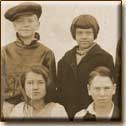
Chuluota School band
1971 class reunion
The school building in 2003, now VFW Post 10139
The Brumley House
The Brumley House is one of the most historic homes in Chuluota, and it still stands today on the south side of Lake Catherine. It was built and owned by C.D. Brumley, a sales agent for the Model Land Company founded by Henry Flagler.
One of the early views also shows Sammy Long’s Store, the building to the right of the house.
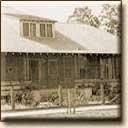
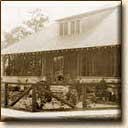
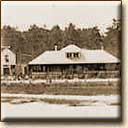
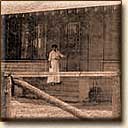
The Brumley House today
Lake Catherine
Lake Catherine is a small yet very picturesque lake on the north side of Chuluota. Its shores were chosen as the building site for many of the early homes in the town. Spring Lake is situated directly to the northeast of Lake Catherine.
The Lake Catherine Inn
The Lake Catherine Inn was formerly known as the Chuluota Inn. It was built around the turn of the century and once boasted “chargrilled steaks and rosin baked potatoes” as part of the dining room fare. While it no longer operates as an Inn, it does serve as apartment housing for residents of Chuluota.
Lake Catherine Apartments today
The historic lakefront building is now Lake Catherine Apartments, one-bedroom apartments in an 8-unit lakefront building of historical interest on spring-fed Lake Catherine. Residents have their own lakefront for picnics, swimming and fishing, and the apartments are within walking distance of the Chuluota Grocery.
Playing cards on the porch of the Lake Catherine Inn
The Lake Catherine Inn across the lake
The Inn under construction
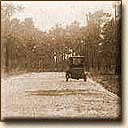
A drive around the lake
Parked at the lake
Lake Catherine Inn brochure cover, 1960s
Lake Mills
Lake Mills is the largest lake in the Chuluota area. Early settlers harvested the abundant timber, and the lake had excellent fishing and many other natural resources. Its shores were home to orange groves and farming operations, and some of these groves still exist today. On a breezy day in February, the delightful scent of citrus blossoms wafts across its waters.
A mule team clearing timber at Lake Mills
Settlers gathered around Lake Mills
Lake Mills today
Fort Christmas
Fort Christmas was built during the Second Seminole War. On Christmas Day, December 25, 1837, U.S. Army troops and Alabama volunteers under Brigadier General Abraham Eustis arrived near the St. Johns River and began building the fort, hence the name. It was finished in about a week: an 80-foot-square stockade of palm logs with two blockhouses, used as a supply depot. The army abandoned it in March 1838 as the war moved south.
The actual fort no longer exists. A full-size replica was built in the late 1970s by Orange County Parks and Recreation and the Fort Christmas Historical Society, less than a mile from the original site. Today Fort Christmas Historical Park, at 1300 N. Fort Christmas Road in nearby Christmas, has restored “Cracker” pioneer homes, a 1906 schoolhouse, a museum, and picnic areas, and entry is free.
Sources: Fort Christmas Historical Society; Orange County Government newsroom (2025); Florida Historical Society; RICHES of Central Florida (UCF). The original Chuluota.com said 1835, which is the year the Second Seminole War began.
The 1957 revival
On Sunday, May 26, 1957, the Orlando Sentinel described Chuluota as “like a tough bantam-weight fighter refusing to quit.” The article told how the community began in 1861, thrived through the 1880s on vineyards, groves and cattle, and went dormant after the big freeze. It described a 1925 revival financed by the Flagler System of the East Coast Railroad, “with schools, stores, churches, hotel, post office, railroad station,” that faded when the land boom burst.
In 1957, developers Ludomil Morski and Thomas Tuck began a new program of about a million dollars, with three subdivisions around the “six pretty lakes” and some 1,100 to 1,200 homesites. The article noted that the railroad through town had been abandoned.
Summarized from the article as preserved in the original Chuluota.com archive.
Maps of the Chuluota area
These are some maps of the area collected from various sources.
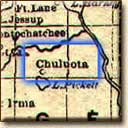
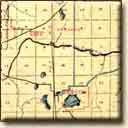
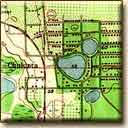
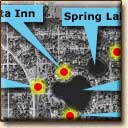
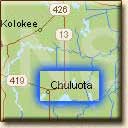
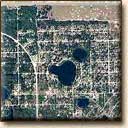
The archive only saved small thumbnails of these maps. Full-size scans would be needed for print-quality images.
The Chuluota archive
The original site kept a larger archive of scanned documents and photos. These items were listed in it. If you have a copy of any of them, or other old photos of Chuluota, please get in touch.
- Report on the Military Operations in Florida, 1835 to 1837
- Reports on the Battle at Loch Hatchee, Jan 26, 1838
- Report on the Location of Fort Christmas
- A Map of Central Florida, 1834
- A Railroad Map, 1886
- A topographical map of the greater Chuluota area, 1970
- Flagler Land Brochure (undated)
- Chuluota Brochure (undated)
- Seminole County Brochure, 1925
- Chuluota Company Municipal Record, 1930
- Polonia Park, a Proposed Development, 1953
- Chuluota Building Boom, Orlando Sentinel, May 26, 1957
- A Brief History of Chuluota by Jim Chandler, 1960s
- The Chuluota Challenger: Oct 20, 1961; Jan 31, 1963; May 30, 1963; June 27, 1963
- Brumley House views and Mrs. Brumley at home
- Lake Catherine Inn photos (1920s?) and a 1960s advertisement
- A Nice House in the Forest; Avenue E and 3rd, past and present
- Chuluota Train Station
- Sammy Long’s Store
- School class photos 1925, 1935, 1936; band (1940s); reunion (1971)
- Views of Lake Catherine and Spring Lake
- A panorama of the greater Chuluota area taken at the turn of the century